Blog · Leads
Free contractor leads: how to get leads without buying them
How do you get leads without buying them? Free contractor leads are real, but none of them cost nothing. You pay once, for a wrap or a box of yard signs, or you pay with your time, by asking for referrals and knocking on doors. Here's what free leads for contractors really cost per signed job, how to turn up the referrals you already get, and the rules to check before you print a single card.
By Ali Kashif, who runs Booked Remodelers · Checked against Google's review policy, the FTC's email rules and California's contractor law · 29 October 2026 · About 9 minutes
What free contractor leads really cost
A free lead is one you don't pay for each time it comes in. Google Ads, Angi and Thumbtack charge for every lead or click, and the leads stop when the money stops. Referrals, reviews, signs and neighbors cost you once, or cost your time, and keep bringing work after you stop paying.
Here's what one signed job can cost from four sources, and when you pay:
What one signed job costs, by where the lead came from
| Lead source | What you pay | Per signed job |
|---|---|---|
| A referral cardExample: 250 for your client, 250 off for their friend | $250 + $250 offOnly once the friend's job is done | $500 |
| Google AdsLocaliQ's 2026 average for a home improvement lead | $90.92 a leadWhether anyone signs or not | $909If 1 lead in 10 signs |
| A full truck wrapOne contractor, wrapped in summer 2024 | $2,800 once | $1,4002 jobs sold so far |
| A cheaper wrapAnother contractor, summer 2025 | $400 once | No job yet0 leads so far |
Set those against what one job earns. A midrange bathroom, at the national cost of $26,138 in Cost vs Value 2025 and NAHB's 29.9% average gross margin, leaves about $7,815 of gross profit, so one signed bathroom pays for any of them.
Paid leads still have a place, and our post on whether Google Ads is worth it for contractors covers when. Start with the free sources: a remodeler with steady referrals and a strong Google profile can afford to test ads, because one slow month won't sink the business. Our page on lead generation for contractors sorts every source into owned and rented.
Referrals: the free lead source you can turn up
Most owners think referrals just happen. They happen more when you ask, make it easy to pass your name on, and remind people later. Ask every client, your friends and family, and the trades you work with: "Do you know anyone planning a bathroom or a kitchen this year?"
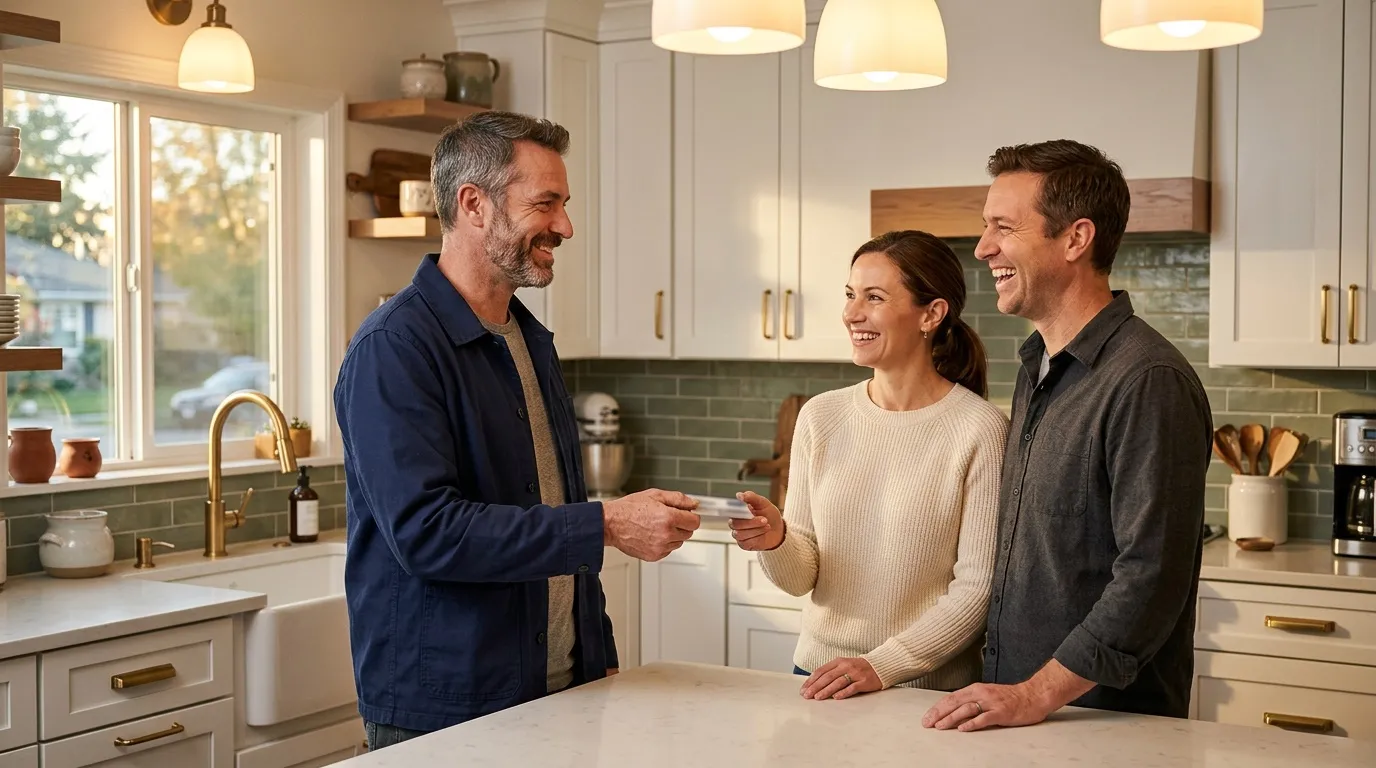
A printed referral card makes the ask concrete. Hand two to every happy client at the final walkthrough, with their name and an expiry date filled in. One is theirs to keep, one is for a friend.
Some states, California included, ban cash referral rewards to homeowners, so check yours before you print a dollar amount. The card works without a cash reward too.

Send the same card by email, with a reminder before it expires
A printed card ends up in a kitchen drawer. So send the same card by email a few days after the job, as a copy your client can forward to a friend in one tap, with its own code so you know who sent the friend. Then remind them around day 30, and once more two weeks before the date on the card. The expiry date is real, so the reminder is honest, and it gives people a reason to act now instead of someday.
- Starts whenAt the handover: two printed cardsTheir name on each, the expiry date filled inThe review request goes out on its own and never shares a message with the referral card. Google doesn't allow a reward in exchange for a review, so the card never mentions one.
- EmailDay 3: the same card by emailA copy they can forward, with its own codeA printed card ends up in a drawer. The email copy forwards to a friend in one tap, and its code tells you who sent the friend, so you know who to thank.
- WaitWait until day 30
- ChecksHas a friend used it?YesYou get an alert with who sent themNoA kind reminder
- EmailDay 30: "Know anyone planning a project?"One photo of their finished room, and the card again
- Email14 days before it expires: a last reminderThe real date on the card, never a made‑up deadline
- ResultThen it stops. Every email has an unsubscribe link.
That's how Booked runs it for remodelers, by email only. The FTC's CAN‑SPAM guide covers marketing email to past customers too: every message needs "a clear and conspicuous explanation of how the recipient can opt out", and an opt‑out has to be honored within 10 business days.
Check your state's rules before you offer cash
In California, you can't offer a homeowner money, credit or any other reward for sending you home improvement work, and a promotional gift to a prospective customer can be worth $5 at most. A violation is a misdemeanor and a cause for discipline by the license board.
The exact words
California's contractor law says no one may "promise or offer to pay, credit, or allow to any owner, compensation or reward for the procurement or placing of home improvement business with others" in connection with a contract, and it caps promotional gifts to prospective customers at $5 (Business and Professions Code 7157).
Other states have their own rules, so ask your licensing board or a lawyer before you print a dollar amount. Where a reward isn't allowed, the card still works without one: it puts your name, your number and your work in the friend's hand.
Your Google Business Profile and reviews
A Google Business Profile is free, and with enough reviews it can bring calls before you even have a website. Google says "more reviews and positive ratings can help your business's local ranking", and 47% of consumers won't use a business with fewer than 20 reviews (BrightLocal, 2026).
So ask every client for a review the day you finish. A card with a QR code that opens your review box makes it one scan on their own phone. And a card people take a photo of outlasts a business card, which usually ends up in the trash. The words and the timing are in our post on how to ask customers for reviews.
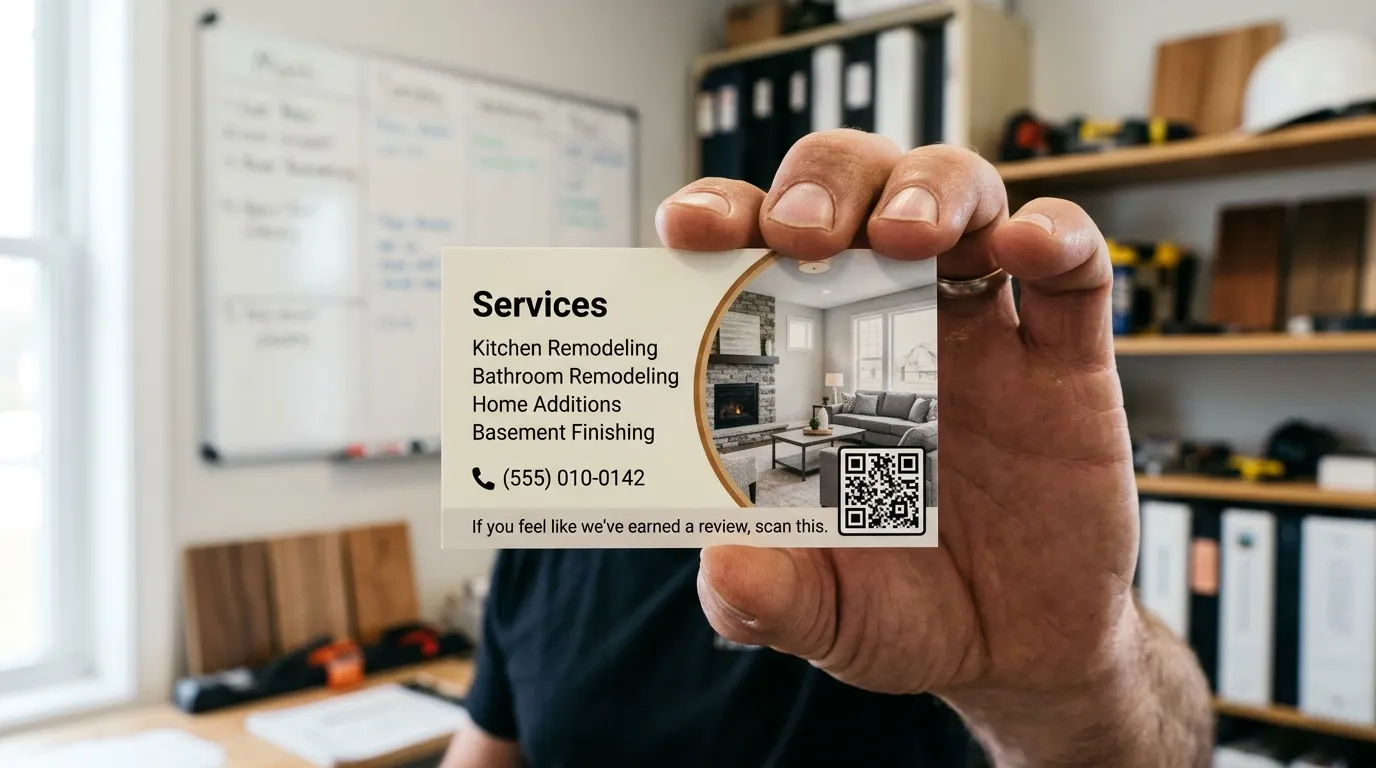
Keep the two asks apart. Google's policy says businesses may not offer incentives "in exchange for posting any review", and may not ask only the happy customers. So the referral reward never mentions a review, and every client gets your review link, whatever they thought of the job. Our page on review requests shows how Booked asks, our guide to remodeling leads from Google covers the profile itself, then Local Services Ads, and how to rank higher on Google Maps shows how to make the profile match your website. If you'd rather hand it off, our Google Business Profile service sets up your profile, services and photos, then sends review requests and replies every month.
Truck wraps, yard signs and shirts: be seen where you want to work
A wrap, a sign and a shirt with your name and number cost money once, then keep putting you in front of homeowners, who can only call a contractor they know exists. Buy them once some work is already coming in.
Truck wraps split contractors. In one YouTube comment thread, a contractor who paid $400 for a wrap in summer 2025 said it brought 0 leads, and another who paid $2,800 for a full wrap in summer 2024 had sold 2 jobs from it. Both said the real value was looking more legit in the driveway. If you wrap a truck, put a phone number on it that's used nowhere else, so you can count the calls it brings.
Yard signs only work where people see them. Ask every client if you can leave one in their yard during the job and for a few weeks after. Keep them away from the road. The strip along the street, with the tree lawn and the sidewalk, is often public land, and city sign codes can ban signs there. Nelsonville, Ohio, for one, allows "no sign of any type" in that strip and removes the ones it finds (city notice, April 2026). Check your city's sign code first.
Shirts, hats and the card you hand out do the same job up close. A homeowner who sees your name on your shirt and your truck knows they're dealing with a business. And if you want work in one neighborhood, drive through it on your way home, when people are pulling into their driveways. After a few weeks, people start to think you work there all the time.
Knock on the neighbors' doors at every job
The easiest door to knock on is next to a job you're already doing. The neighbors will see your trucks for weeks anyway, so introduce yourself before they start wondering who you are.
A script like this works:
ExampleAt the door
It costs nothing, and it's good practice at talking about your work. Going door to door beyond your job's street is a bigger step, so check whether your town needs a permit for it first.
Trade partners and local Facebook groups
Other trades meet your next customers before you do. Plumbers, electricians, painters and flooring installers get asked who they'd recommend, and they send work to the people they know and trust.
So get to know them. Buy lunch, visit their job site, send them work first, and ask what kind of customer they want. Tell them when you have an opening:
ExampleText to a trade partner
Over the years, the remodeler every trade knows tends to get the referrals. If money changes hands between you, check your state's rules on that too.
Local Facebook groups work the same way, if you join in instead of posting ads. Read each group's rules, answer people's questions, and share finished work where it's welcome, so people already feel they know you when they need a contractor. Our guide to social media for contractors covers what to post.
Track where every job comes from, then decide what to buy
Ask every new lead how they heard about you, and write it down. Give each referral card its own code and each truck its own phone number. After six months you'll know which free sources bring jobs, not just calls.
| Date (Example) | Name | How they heard | Card code | Signed? |
|---|---|---|---|---|
| Mar 3 | Sarah | Referral card from a past client | LR‑104 | Yes |
| Mar 6 | Karen | Called the truck's number | No card | Not yet |
| Mar 11 | Dan | Google profile | No card | No |
| Mar 14 | Linda | Yard sign at a job | No card | Yes |
An example log with example names. One line for every new lead is enough. After six months, count the yes answers for each source.
Then add paid leads on top of that base. When referrals and reviews bring steady work, you can test Google Ads or Local Services Ads without needing them to pay off in month one. Our 90‑day plan for remodeling leads explains the order.
Whatever the source, answer fast. A referral can still call two or three remodelers, and a slow reply can lose them. The research on reply times is in our speed to lead statistics, missed‑call text‑back answers in your words when you can't pick up, and our post on how to 4X remodeling sales without spending more on leads covers the rest of the path from inquiry to signed job.
Not sure which of these to start with? The free Missed Jobs Test looks at where your jobs come from now, what a job is worth to you and what to fix first, whether you hire us or not.
Get my free Missed Jobs TestBooked · the follow‑up system
One signed bathroom job pays for about two years of Booked
More leads only pay if someone answers them fast and follows up every estimate. Booked does both for you, in your words: a text back in under a minute when you miss a call, and each estimate followed up on day 2, 5, 10 and 21.
Booked
$297 a month
Start today: $774, then $297 a month month to month
$774 is your first month plus the one‑time $477 setup. Stop any month with 30 days' notice.
- Estimate follow‑up until you hear yes or no
- Old leads and past customers brought back
- A review request after every job, with follow‑ups
- Instant reply to every new inquiry, and a booking link
- Missed‑call text‑back and call connect
- Estimate visit confirmations and reminders
- One inbox and the mobile app
- Bonus 2 months of social posts, written and scheduled
The math: a midrange bathroom remodel costs $26,138 nationally (Cost vs Value 2025), and remodelers keep 29.9% of the price as gross profit on average (NAHB, 2026). That's about $7,800 from one job.
Are free leads for contractors really free?
Not quite. Free means you don't pay for each lead. Referrals cost your time and maybe a thank‑you, a Google profile costs nothing but the effort of asking for reviews, and a wrap or a box of yard signs costs money once. The difference from Google Ads or a lead site is that they keep working after you stop paying.
Can a contractor pay a customer for a referral?
Check your state's rules first. In California, the contractor law says no one may offer a homeowner compensation or a reward for sending you home improvement business in connection with a contract, and it caps promotional gifts to prospective customers at 5 dollars (Business and Professions Code 7157). Other states have their own rules. Ask your licensing board or a lawyer before you print a cash reward. A referral card without the money still works.
Can I give a discount for a Google review?
No. Google's policy says businesses may not offer incentives in exchange for posting any review, and may not ask only the happy customers. Keep the referral reward and the review request in separate messages, and give every client your review link whatever they thought of the job.
Where can a contractor put yard signs?
In a client's yard, with their permission, during the job and for a few weeks after. Keep them out of the strip along the street. That's often public land, and city sign codes can ban signs there and remove them. Check your city's sign code before you place one anywhere else.
Do truck wraps bring in leads?
Sometimes. In one YouTube comment thread, a contractor with a 2,800 dollar full wrap had sold 2 jobs from it, and another with a 400 dollar wrap had no leads at all. Both said it made them look more legit. Put a phone number on the wrap that's used nowhere else, so you can count what it brings, and buy it once other marketing is working.

Free Missed Jobs Test
Find out who's taking your jobs, and what it's costing you. Free.
We test your business the way a homeowner does, then show you in dollars which jobs you're losing and who gets them. One 30‑minute call, with your fix‑first plan.
4.8 out of 5 from 3,668 reviews14,300+ orders completed on Fiverr9 years in local SEO
You walk away with
- What a homeowner gets back from you after hours: a call and your form, timed
- Where you show on Google in your best towns, and who shows above you
- Your website on a phone, through a homeowner's eyes
- What it costs you a year, and the 3 fixes that win the most back
Free. We run the tests before your call.